Thirty days of daily actions
Start with a small, specific task for the day. The phone-readable PDF guide gives the search a steady rhythm from setup through weekly review. No printing needed.
A practical search plan for experienced workers
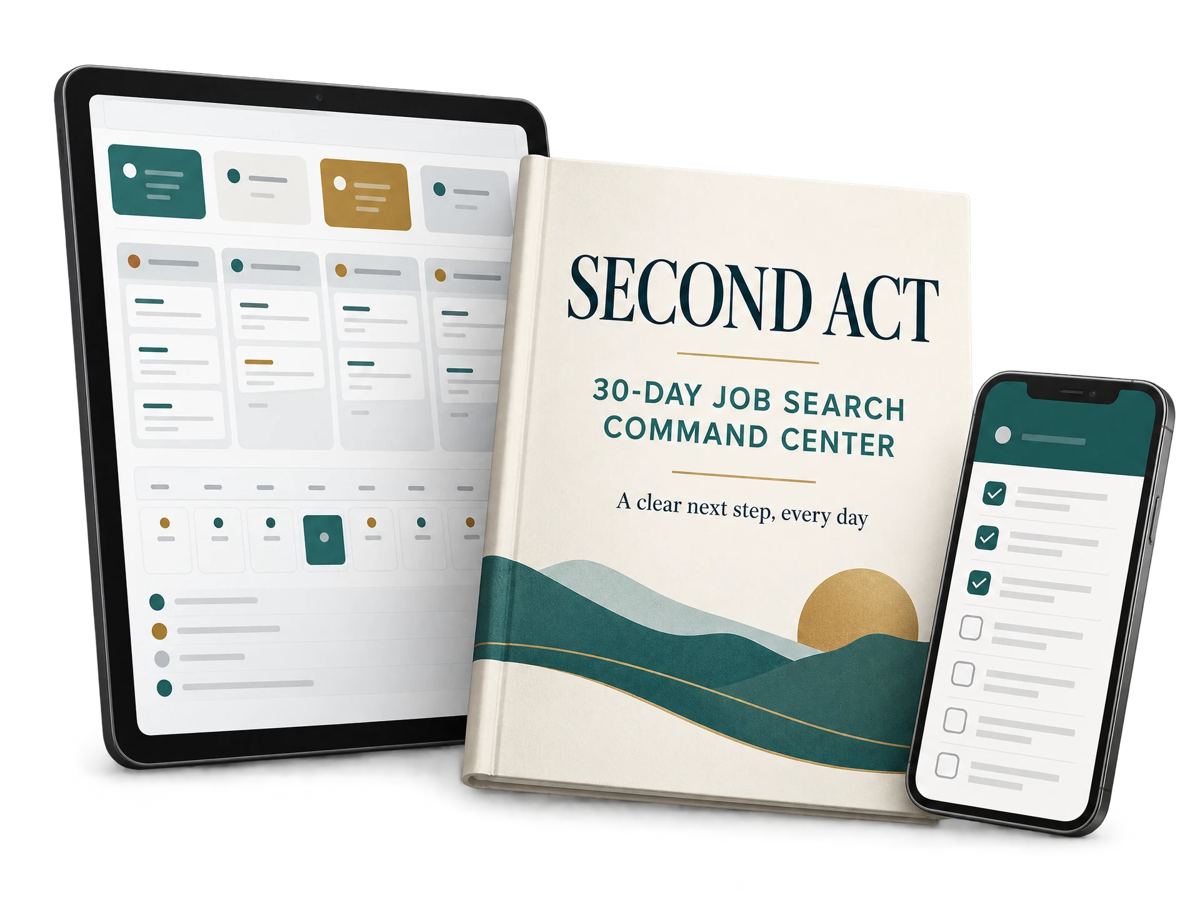
Second Act is a 30-day plan for experienced workers who want a clear view of their search and one useful step each day. A short email each morning brings that day's step. You work a short list of suitable roles instead of sending hundreds of applications.
One-time payment. Instant access. 30-day refund if it is not useful to you.
Or get the first step free by email.
See how the plan worksA search can lose its shape
Applications pile up and follow-ups get buried in email. After another quiet week, it can be hard to tell whether the target needs changing or the resume does.
You send applications and hear nothing, with little signal about what to adjust.
Your work history is long, while each role asks for a different story.
Saved job listings grow, but the next target still feels unclear.
You have former colleagues in mind, but starting the conversation feels awkward.
Application dates and follow-up reminders get lost in inboxes and spreadsheets.
When the search has no rhythm, the work can feel like a string of unrelated tasks. Second Act gives you a daily plan and a place to review each opportunity.
“I have submitted hundreds of applications. I have only gotten a handful of interviews.”AARP Online Community, Career & Employment
That quote is one person's experience, and yours may differ. It shows why a search needs a record you can act on.
What job seekers say they need
of adults 50+ surveyed planned to make a job change in 2025.
of respondents seeking a change expected they would need some help.
said help updating a resume would be useful.
Source: AARP Research, based on a late-2024 survey. The figures describe what people said they planned and needed. They say nothing about hiring outcomes. Read the survey summary.
A more useful search routine
The command center is meant to help you manage the work between applying and hearing back. Use it to keep current details visible and review the search you actually have.
A search you can see
Use the command center to turn an open-ended search into a set of next actions. The 30 days describe a routine. There is no application quota. Your search will depend on your experience, target roles, and the employers you choose.
Start with a small, specific task for the day. The phone-readable PDF guide gives the search a steady rhythm from setup through weekly review. No printing needed.
Record the role, employer, application date, contact, status, follow-up date, next action, and notes. Find the details without searching through old messages.
Use the current pipeline to decide what deserves attention, whether that is a follow-up, an application, or time to prepare the next role-specific materials.
Use short, respectful scripts for checking in after an application or restarting a conversation with a former colleague.
Notice where your time went, mark what needs attention, and choose the next week's priorities from the search you actually have.
Each day's step arrives in your inbox for 30 days, so you never have to hunt for a file. Reply to any email if you get stuck. A real person reads it.
How to use it
Choose the roles you are pursuing and enter current applications. Follow the day's action, then record what happened. At the end of the week, use the tracker to decide where your attention should go next.
Name a role or a small group of related roles to focus on.
Use the daily plan to prepare, contact, apply, or follow up.
Update the pipeline and select a useful next move.
Built for your next move
Your work history is a source of examples and results. The job is to make the relevant parts easy to find for the role in front of you. Second Act is designed for people who want structure around that work, whether they have been searching for months or are returning after time away.
Keep the claim honest. A tracker cannot control employer decisions or remove hiring bias. It can help you keep your materials, conversations, and next steps organized.
Second Act
A 30-day guide, an editable Google Sheets tracker, follow-up messages, weekly reviews, and a short email each morning with that day's step.
Secure checkout by Stripe. One-time payment, no subscription.
This product supports the job-search process. It does not guarantee interviews, employment, salary, or a hiring timeline.
Free first step
Enter your email and we will send you one real step from the plan today: how to name a clear target. It works whether you have applications out or none yet. Over the next ten days you will also get four short notes about what is inside Second Act. Unsubscribe any time.
Questions
Adults 50+ who are looking for work or changing direction and want a clear way to organize their next steps.
Right after checkout, an email with a phone-readable PDF guide and a link to copy your own Google Sheets tracker. Then one short email each morning for the next 29 days with that day's step. The guide also includes next-action rules, weekly review prompts, and four messages you can adapt.
No. Hiring decisions depend on employers and circumstances outside this product. It provides organization and practical steps for managing a search.
Plan on about 35 minutes for the quick start. You do not need to read the whole guide first. After that, each day's step is usually one sitting. Your own time will depend on your starting point.
No. The tracker is a Google Sheet you copy into your own free Google account. If you prefer Excel, the welcome email also has an .xlsx version. The guide opens on any phone.
Only you. Your copy lives in your own Google account. Second Act cannot see it.
Reply to any Second Act email within 30 days of purchase and ask for a refund. You will get your money back.
Yes. Every email has an unsubscribe link. Your guide and tracker stay yours.
One clear next step
One-time payment. Instant access. 30-day refund.